
ELIMINATE SAMPLING. MEASURE BIOMASS IN REAL TIME
Biomass sensors deliver real-time, in-situ measurement of cell density, removing the need for manual sampling and offline lab analysis. The result is immediate, reliable data without the delays, contamination risks, or dilution errors that come with traditional methods.
Using NIR optical technology, the sensor measures either absorbance or backscatter directly in the process through durable sapphire windows. These signals correlate instantly to biomass concentration (g/L or OD values), giving you a continuous, accurate view of what’s actually happening in your process—not a diluted approximation.
From early growth to high-density fermentation, biomass sensors provide consistent, repeatable measurements across the full range. Absorbance handles lower concentrations, while backscatter extends into very high cell densities (200 OD and beyond).
Applications include:
- Real-time cell growth monitoring
- Microorganism concentration measurement
- Endpoint detection
- Feed rate control
- Dilution rate determination
- Fermentation monitoring and optimization
Two proven technologies stand out as reliable solutions for real-time biomass measurement. The Exner EXcell NIR probe uses absorbance-based measurement to deliver high-precision results across the full process lifecycle from lab-scale development to full production, making it a strong fit for biopharmaceutical and biotech applications. For higher concentration processes, the Kemtrak TC007 leverages backscatter measurement with an exceptionally wide dynamic range, enabling stable, real-time monitoring even in dense, highly aerated fermentations. Together, these technologies cover the full spectrum of biomass measurement, providing dependable, in-situ data.
Cell Culture Production
Drugs such as injectable biologics and vaccines produced by biotech companies are often produced using mammalian cell culture techniques. To produce these products, cells are cultivated in a rich nutrient media and infected with a virus. As the cells grow and multiply, they produce more of the virus. One of the key metrics required in cell culture is cell mass or biomass as this relates to cell count or density. Knowing the density of cells within the media allows for the proper control of nutrient and gas addition to the vessel to keep the cells in a healthy state and maximizes yield.
Maintaining the correct cell density enables precise control of nutrient and gas addition, ensuring optimal growth conditions throughout the process. Traditionally, this has been measured through manual sampling and offline analysis (e.g., OD600/OD660), a method prone to handling errors, operator variability, and contamination risk.
In-situ NIR absorbance probes eliminate these issues by measuring optical density directly in the bioreactor. Installed through standard ports and sterilized in place, they provide continuous, real-time biomass data as the process runs. Higher cell density results in increased light absorbance, enabling accurate tracking of growth trends and process stages.
With reliable, repeatable measurements, biomass sensors support tighter process control, improved feed strategies, and better endpoint determination, ultimately increasing yield while reducing reliance on manual sampling and lab work.
Bacterial Fermentation
Bacterial fermentation presents significantly greater challenges for biomass measurement than mammalian cell culture. Aggressive agitation and high aeration rates create a turbulent, bubble-filled medium that causes many optical probes to produce noisy, erratic readings, particularly at higher cell densities. Without reliable inline measurement, frequent manual sampling is necessary, introducing contamination risk and time delays that leave gaps in the process record. Since fermentations routinely run for days or weeks, including unattended overnight and weekend periods, continuous automated monitoring is essential.
The standard reference measurement for bacterial biomass is absorbance at 600–660 nm. By correlating offline sample counts against inline OD readings during development, a calibrated inline sensor can continuously and automatically track biomass throughout the run, eliminating the need for routine manual sampling.
Choosing the Right Probe is key to getting a reliable measurement:
- For lower-density fermentations, the Exner EXcell transmission probe is an excellent choice. Its compact, self-contained design with electronics integrated directly into the probe head makes it ideal for crowded headplates on laboratory bioreactors. Multiple probes can be connected to a single PC running Exner's EXpert software for simultaneous logging, with Modbus communications enabling easy integration with data systems including LabVIEW®.
- For dense and very dense cultures, the Kemtrak TC007 with in-situ backscatter probe is ideal for the demands of bacterial fermentation. Its angled window geometry resists fouling and buildup, while software-enhanced bubble rejection effectively eliminates the optical noise that renders many probes unreliable in high-aeration environments. The result is a stable, high-confidence measurement across a dynamic range spanning 0.5 to >200 OD units.
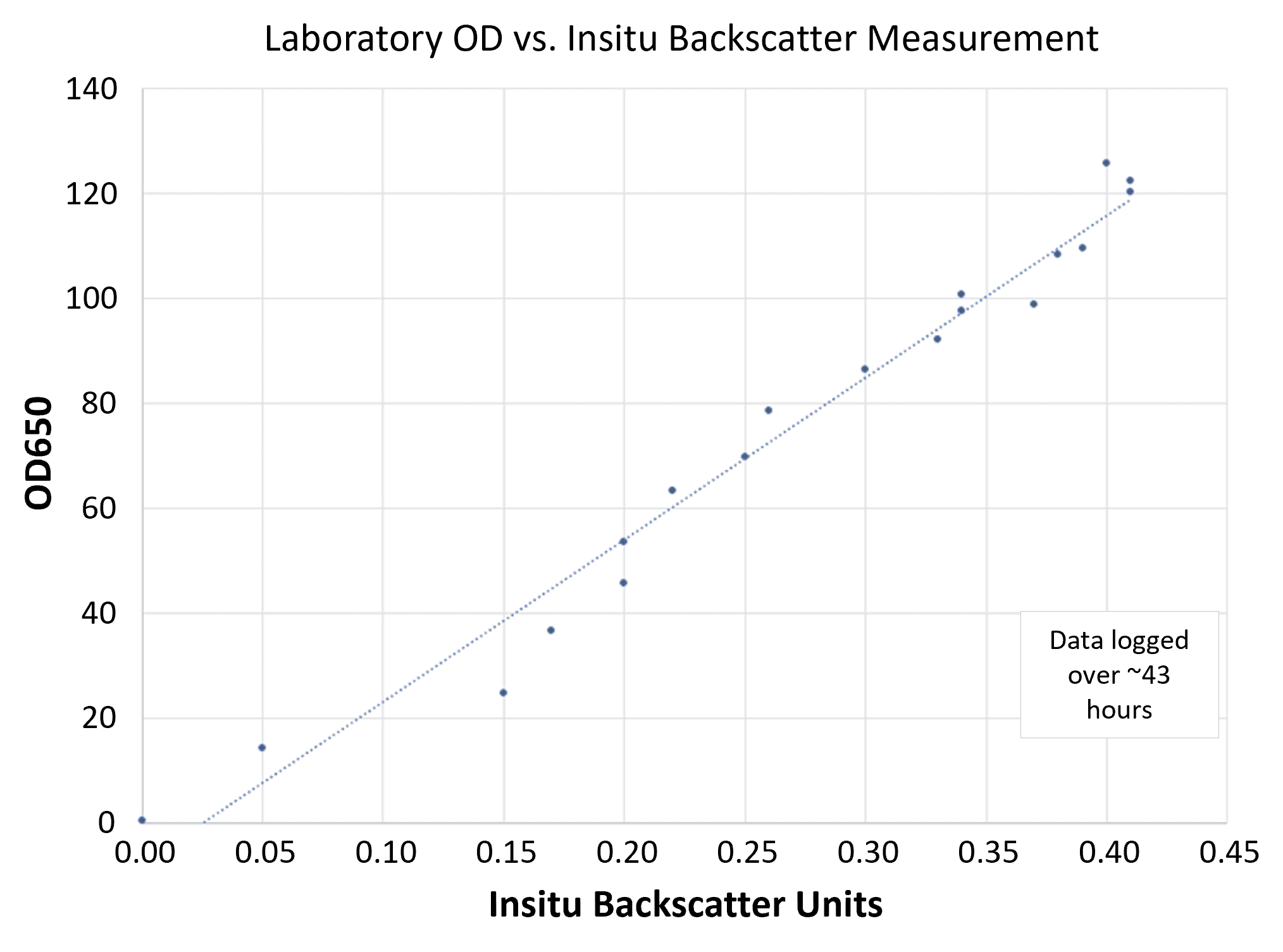
Both platforms use NIR light sources to minimize the influence of medium color, and incorporate smart filtering to cut through bubble interference, maintaining measurement integrity where other sensors struggle. This enables early, reliable detection of changes in cell growth rate and gives the insight needed to intervene, optimize, or determine harvest endpoint with confidence.
Microalgae Cultivation
Microalgae are a highly versatile and renewable resource, rich in proteins, essential fatty acids, oils, vitamins, and minerals. They are widely used across industries including pharmaceuticals, cosmetics, chemicals, bioenergy, and increasingly in food production. Typical species used include Arthrospira (Spirulina) and Chlorella.
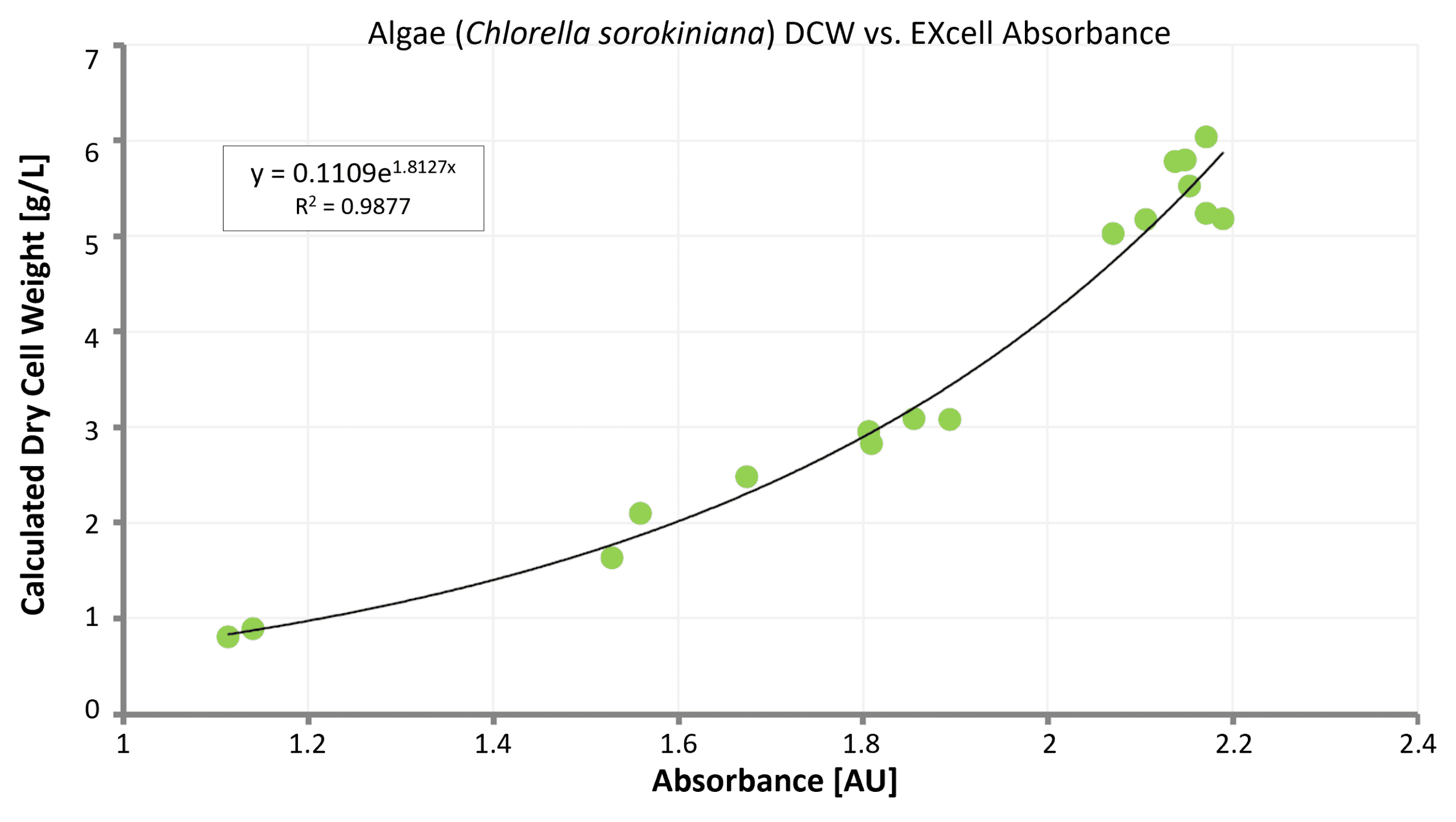
Cultivation takes place in photobioreactors, where algae are supplied with light, nutrients, and CO₂ to support photosynthesis and growth. Light intensity is a critical parameter and must be carefully controlled to ensure efficient biomass production. Depending on plant scale and process requirements, cultivation is typically carried out in batch or fed-batch operation, using a variety of reactor designs.
Reliable, in-situ biomass measurement is essential for optimizing these processes. Since cultivation cycles can span days or even months, continuous monitoring provides valuable insight into growth rates, phase transitions, and response to changing conditions, ultimately enabling precise determination of the optimal harvest point.
Optical sensors such as the EXcell biomass probe are well suited to this application. By using near-infrared (NIR) light, they avoid promoting algae growth on the sensor surface, ensuring stable, low-maintenance, and accurate measurements over extended operating periods.
Yeast Cell Cultivation
Yeast has long been a cornerstone of research and industrial biotechnology, contributing to our understanding of fundamental cellular processes such as regulation, aging, and cell death. Today, a wide range of commercially available yeast strains are used in production, research, and education. Consistent cultivation and tight process control are essential to ensure reliable results and high product yields.
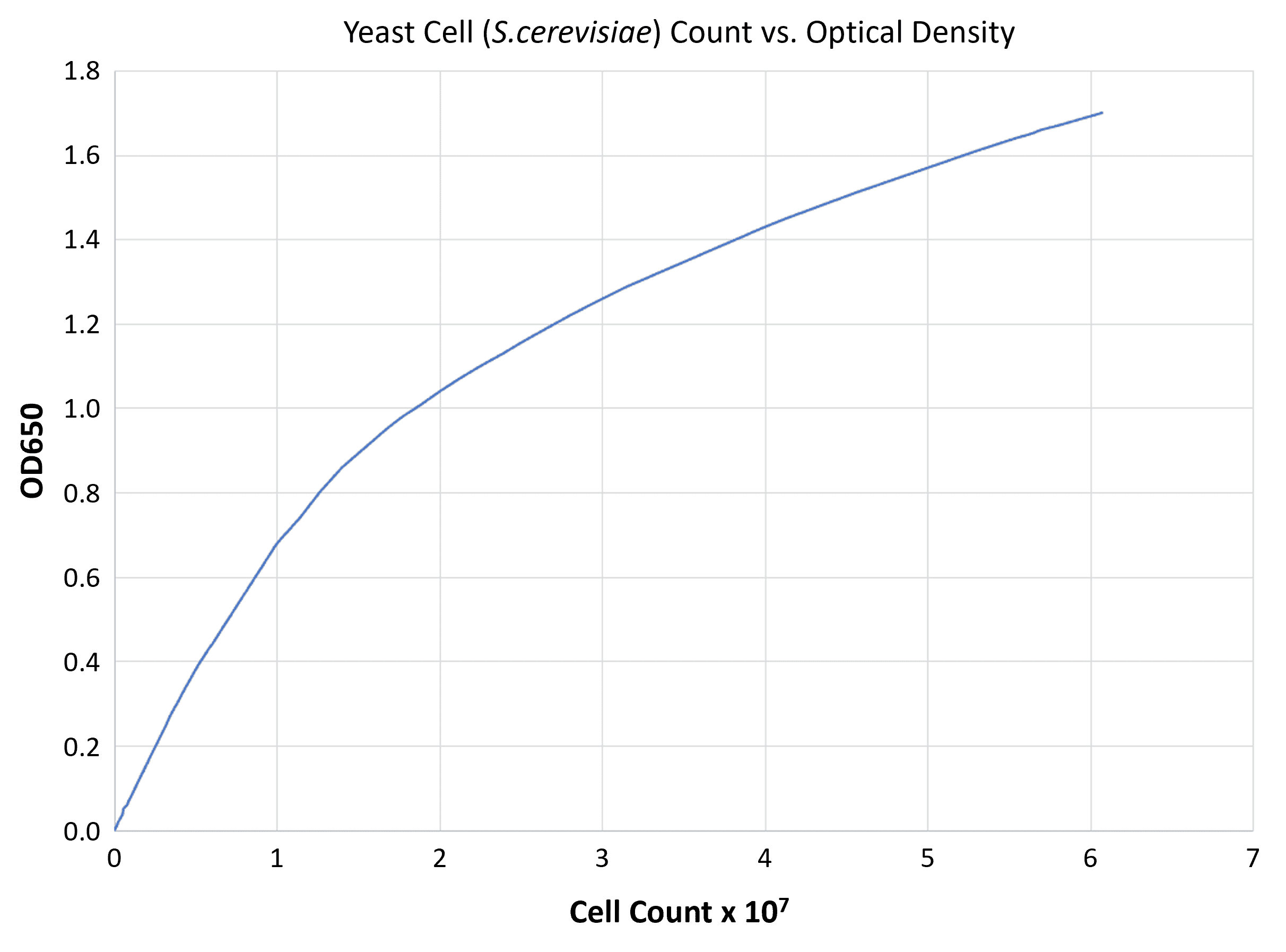
Yeast is grown in nutrient-rich media designed to support rapid cell growth and replication. Following inoculation, the culture progresses through three distinct phases: lag, exponential (log), and stationary. During the lag phase, cells adapt to their environment and prepare for growth. This is followed by rapid cell multiplication in the log phase. As nutrients are consumed, growth slows and the culture enters the stationary phase, where biomass stabilizes before eventually declining as resources are depleted.
Accurate, real-time biomass measurement is key to monitoring these growth stages and maintaining optimal conditions. Continuous insight into biomass levels allows operators to adjust nutrient and gas feed rates, respond to process changes, and determine the ideal point for harvesting.
Optical biomass sensors from Exner and Kemtrak are well suited to yeast cultivation. Using near-infrared (NIR) light, they provide reliable measurements independent of media color, while advanced signal processing minimizes the effects of bubbles and high CO₂ sparging rates. This ensures stable, real-time data that supports better process control, improved consistency, and maximum yield.
Frequently Asked Questions
This is a problem with many optical sensors. However, the Exner EXcell sensor can be installed in an Exner EXtract retractable housing (the same type as used for pH and DO2 probes) making it possible to withdraw the biomass probe aseptically from time to time to remove any coating that may be on the window surfaces. The probe can then be re-sterilized in the retractable housing before being reinserted into service.
Have more questions? Take a quick moment to get in touch with our expert sales engineers and technologists and we'll guide you to a solution.
No matter the application or industry, South Fork Instruments can develop a superior optical sensor-based measurement solution.
We have provided NIR optical sensor solutions to clients in such industries as food and beverage, chemical processing, pharmaceutical manufacturing, and biotechnology, and can assist you in developing and effective and efficient means of fulfilling your measurement needs.
SOUTH FORK INSTRUMENTS
3845 Buffalo Road
Auburn, CA 95602
Tel: (+1) 925-461-5059