
Optimizing Brewing with Inline Turbidity Measurement
Measuring Turbidity in Brewing
Historically, brewers have relied on visual inspection through sight glasses, time-controlled processes, or conductivity measurements to determine batch progress. However, operating with these methods can create inefficiencies, increased product loss, and higher operational costs. Modern brewing demands more accurate and reliable solutions, making optical measurement technology, particularly backscatter turbidity sensors, an indispensable tool.
Limitations of Traditional Methods
Traditional methods for monitoring phase separation in brewing fall short in several areas:
- Sight Glasses: Determining turbidity (or clarity) level by visual inspection is subjective and dependent on individual assessment, making it difficult to precisely determine when to divert to waste. This lack of objectivity can lead to valuable product loss and affect product quality.
- Time-Controlled Processes: Relying on pre-set timers for switching between tanks or diverting to wastewater is based on experience (minus a safety margin) but often results in product over-diversion to waste or inefficient use of resources. This can significantly increase product loss and wastewater treatment costs.
- Conductivity Measurement: While more objective for determining process status than sight glasses, the high sensitivity of conductivity measurement to temperature fluctuations can add additional uncertainty and require complex temperature compensation to mitigate. Lagging response time can lead to “late switching”, causing product quality issues.
These limitations highlight the need for a specific measurement technology that will provide the reliability and accuracy needed to optimize separation activities to give the best product yield with the lowest costs.
The Rise of Optical Turbidity Measurement
Optical turbidity measurement offers a superior alternative, providing real-time, objective data for process optimization. Among optical methods, backscatter measurement is very well-suited for the medium to high turbidity values commonly encountered during brewing, and particularly in the area of yeast management (yeast cultivation, recovery, and disposal).
Given the demanding environment of breweries, turbidity sensors must meet stringent requirements:
- Accuracy and Reproducibility: High precision and resolution is essential for differentiating between different brew types and ensuring consistent results batch after batch.
- Robustness against Interference: The sensor must be designed to minimize the impact of common interference factors like bubbles, fouling of the sensor's optical surfaces, and mechanical wear.
- Hygienic Design and Cleanability: Sensors must be seamlessly integrated into piping systems using hygienic connections (e.g., sanitary clamp connections) that prevent dead spaces. Wetted parts must have appropriate surface finishes and be fully compatible with Clean-in-Place (CIP) and Sterilization-in-Place (SIP) processes to prevent contamination.
- Durability and Protection: Beyond internal cleanability, the sensors requires appropriate external protection (i.e. IP rating) to withstand the harsh conditions of a brewery environment.
- Ease of Use: For practical implementation, sensor design must provide simple connection, installation and user-friendly operation. The ability to quickly and reliably test and calibrate sensors in the field using NIST-traceable reference standards is crucial for continued confidence in the measurement.
Applications in Brewing
breweries, including:
- Yeast Management: Crucial for monitoring yeast cultivation, harvesting, and recovery processes to ensure optimal cell counts and viability.
- Separator Control: Real-time monitoring of turbidity at separator inlets and outlets helps optimize separator operation and efficiency.
- CIP Monitoring: Detecting turbidity levels during tank and pipe flushing to ensure thorough cleaning and minimize cleaning agent and water usage.
- Filter Breakthrough Detection: Immediate identification of filter integrity breaches to prevent product contamination.
- Phase Separation Monitoring: Precise determination of changeover points between different liquid phases, such as wort and hot water, or beer and cleaning solutions, minimizing product loss and maximizing yield.
- Concentration Measurement: Color-independent measurement of highly turbid liquids.
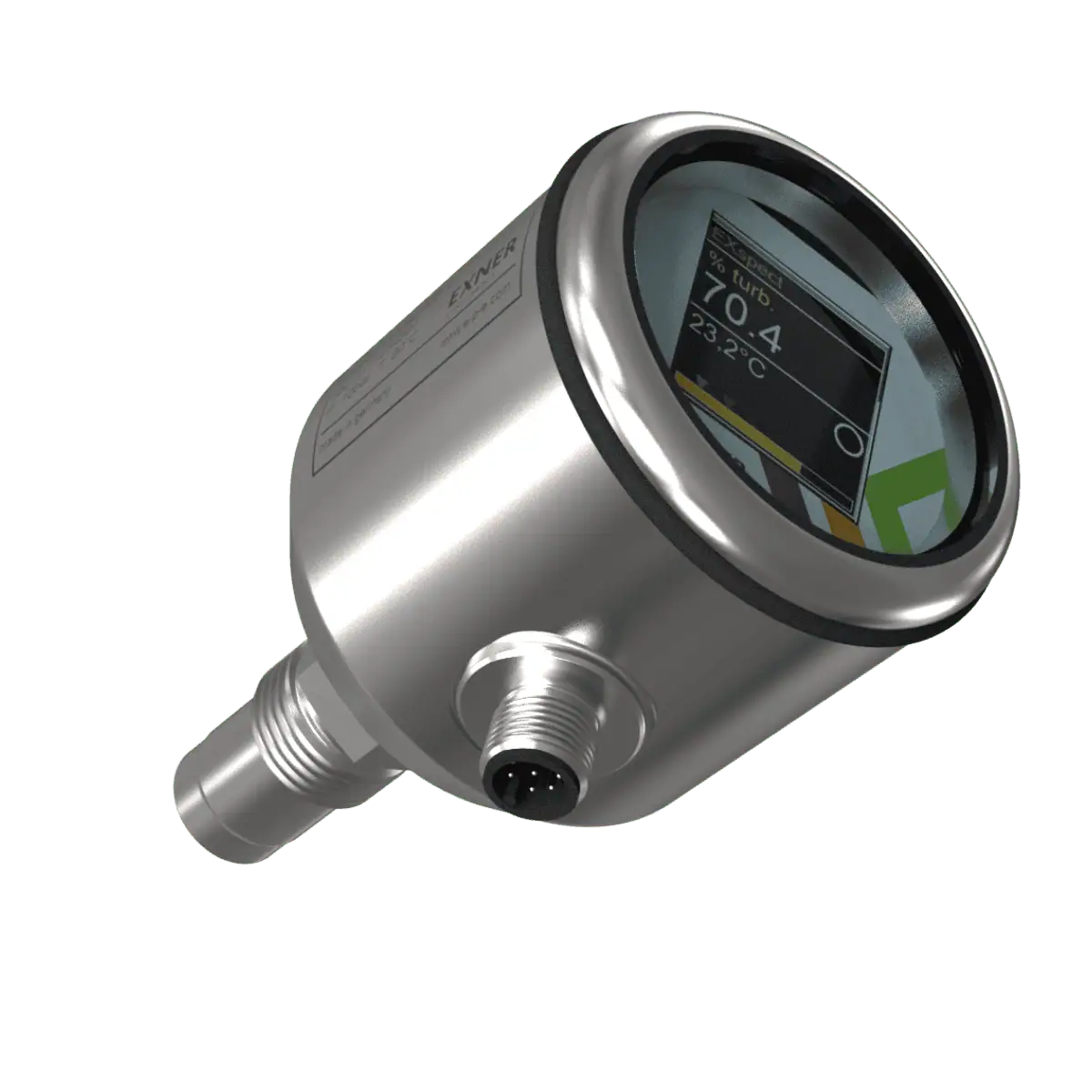
The EXspect 271 is an economical addition to any brewing process, with rapid and measurable ROI following its implementation. For more details, click here
Tangible Benefits for Brewers
- The adoption of advanced turbidity measurement technology as found in the Exner EXspect 271 offers significant benefits, translating into substantial cost savings and enhanced resource conservation:
- Reduced Wastewater Costs: By accurately determining changeover points, brewers can significantly reduce the volume of product diverted to wastewater, lowering disposal costs.
- Lower Fresh Water Consumption: Optimized cleaning processes, driven by precise turbidity monitoring, minimize the amount of fresh water needed for rinsing.
- Minimized System Downtime: Efficient cleaning and accurate phase separation reduce the time equipment is offline, increasing overall plant uptime.
- Decreased Cleaning Agent Usage: Knowing exactly when pipes and tanks are clean reduces the unnecessary use of expensive cleaning chemicals.
- Increased Product Yields and Reduced Product Loss: Precise control over separation and diversion processes ensures that valuable product is not wasted, directly contributing to higher yields.
Integrating advanced turbidity measurement technology into brewing operations is not just about adopting new sensors; it's a strategic investment that drives significant improvements in quality assurance, process efficiency, cost optimization, and environmental sustainability.
SOUTH FORK INSTRUMENTS
3845 Buffalo Road
Auburn, CA 95602
Tel: (+1) 925-461-5059