• Skip to main content
Southfork Instruments logo
  • Home
  • Solutions

    PROCESS ANALYTICS

    • pH and ORP Solutions

    • Inline Turbidimeters

    • Biomass Measurement

    • Color Measurement

    • UV Absorbance Measurement

    • UV-VIS-NIR Absorbance and Concentration Measurement

    • Solids Concentration Measurement

    • Oil-in-Water Measurement

    • Water Quality Analyzers

    • Spectroscopic Compositions Analysis

    • Moisture Analysis

    CONTINUOUS LEVEL

    • Non-Contact Ultrasonic Level

    Flow Measurement

    • Coriolis Mass Flow Meters

    • High Pressure Coriolis Mass Flow Meters

    COMPONENTS

    • Turbidity Sensors

    • Sensor Housing & Holder Solutions

    • Inline Optical Flow Cells

    DETECTION

    • Foam Detection & Control

    • Oil-On-Water

    • Algal Bloom

    Need help finding a measurement solution?

    Here at South Fork Instruments, we configure tailor-made solutions for our customers’ exact measurement requirements. Find out how we can help you get the measurement you need.

    Contact Us
  • Products

    Rheonik

    • Coriolis Mass Flow Meters

    Exner

    • Turbidity Sensors

    • Housings & Accessories

    • Biomass Sensors

    SFI

    • pH/ORP Sensors

    • pH/ORP Transmitters

    Kemtrak

    • UV-VIS-NIR Photometers

    • Inline Colorimeters

    • Inline UV Analyzers

    • Inline Turbidimeters

    • Solids Concentration Analyzers

    • Oil-in-Water Analyzers

    • Inline Optical Flow Cells

    BRAN + LUEBBE

    • Water Quality Analyzers

    HYCONTROL

    • Foam Detection and Control

    • Non-Contact Ultrasonic Level

    REFEX

    • pH/ORP Sensors

    ITPHOTONICS

    • Inline Spectrophotometers

    • Portable Spectrophotometers

    LDI

    • Oil-On-Water ROW

    • Algal Bloom ROW

  • Resources

    DATA SHEETS AND PRODUCT INFORMATION

    News & Resources

    • Data Sheets & Brochure Downloads

    • Application Information Downloads

    • Comprehensive Guide to Industrial pH Probes

    • Articles

    Careers

    • Available Positions

  • Contact
  • Call 925-461-5059
  • Home
  • Solutions
    • Coriolis Mass Flow Meters
    • High Pressure Coriolis Flow Meters
    • Turbidity Measurement Solutions
    • Color Measurement Solutions
    • UV-VIS-NIR Concentration Measurement
    • Solids Concentration Measurement
    • Oil-in-Water Measurement
    • NIR Optical Probes & Process Sensors
    • pH & ORP Electrodes
    • Water Quality Analyzers
    • Process Sensors
    • Sensor Housing & Holder Solutions
    • Foam Detection & Control
    • Spectroscopic Compositions Analysis
    • Moisture Analysis
    • Oil-On-Water
    • Algal Bloom
  • Products
    • Rheonik Mass Flow Meters
    • Exner NIR Process Sensors
    • Exner Housings & Accessories
    • Kemtrak Photometers
    • Kemtrak Turbidimeters
    • Kemtrak Oil-in-Water Analyzers
    • UV Absorbance Photometers
    • Hycontrol Foam Detection & Control
    • Refex pH & ORP Electrodes
    • SPX Flow Water Quality Analyzers
    • SFI pH/ORP Sensor
    • pH/ORP Transmitters
    • Inline Spectrophotometers
    • Portable Spectrophotometers
    • Oil-On-Water ROW
    • Algal Bloom Row
  • Resources
    • Data Sheets and Brochures
    • Application Information
    • Comprehensive Guide to Industrial pH Probes
    • News and Resources
    • Careers
  • Contact
  • Call 866-953-4668
×
  • Home
  • Solutions
    • Coriolis Mass Flow Meters
    • High Pressure Coriolis Flow Meters
    • Turbidity Measurement Solutions
    • Color Measurement Solutions
    • UV-VIS-NIR Concentration Measurement
    • Solids Concentration Measurement
    • Oil-in-Water Measurement
    • NIR Optical Probes & Process Sensors
    • pH & ORP Electrodes
    • Water Quality Analyzers
    • Process Sensors
    • Sensor Housing & Holder Solutions
    • Foam Detection & Control
    • Spectroscopic Compositions Analysis
    • Moisture Analysis
    • Oil-On-Water
    • Algal Bloom
  • Products
    • Rheonik Mass Flow Meters
    • Exner NIR Process Sensors
    • Exner Housings & Accessories
    • Kemtrak Photometers
    • Kemtrak Turbidimeters
    • Kemtrak Oil-in-Water Analyzers
    • UV Absorbance Photometers
    • Hycontrol Foam Detection & Control
    • Refex pH & ORP Electrodes
    • SPX Flow Water Quality Analyzers
    • SFI pH/ORP Sensor
    • pH/ORP Transmitters
    • Inline Spectrophotometers
    • Portable Spectrophotometers
    • Oil-On-Water ROW
    • Algal Bloom Row
  • Resources
    • Data Sheets and Brochures
    • Application Information
    • Comprehensive Guide to Industrial pH Probes
    • News and Resources
    • Careers
  • Contact
  • Call 866-953-4668

INLINE Optical Platforms for UV Absorbance Measurement

The DCP007-UV and UV-SPECTRA are industry leading platforms providing real-time inline UV-VIS measurements for concentration and detection applications.

DISCUSS SOLUTIONS WITH OUR EXPERTS
  • DCP007
  • UV SPECTRA
  • Inline Measurement Cells
  • Single Use Measurement Cells
  • Validation Options
  • FAQs

Two great options for ultimate UV measurement flexibility

The Kemtrak DCP007-UV and the UV-SPECTRA are both rugged, process-grade UV measurement instruments built for continuous monitoring in industrial environments — but they target different measurement needs. The DCP007-UV is the simpler, workhorse option: compact, low-maintenance and focused on delivering reliable single/dual narrow-band absorbance measurements from 250nm upwards for straightforward concentration control and process-trending. It’s the sort of instrument you pick when the job is well defined and you want a robust, cost-effective monitor that integrates cleanly into a control system with minimal fuss.

The UV-SPECTRA, by contrast, is a high-resolution UV spectrophotometer for when you need more information from a single installation. Using a xenon flash lamp and with a measurement capability across 190–440 nm, it can report absorbance/transmission simultaneously at up to ten discrete wavelengths — which makes it far better at tracking multiple components, detecting subtle impurities, or providing spectrally informed alarms and quality checks from one sensor. In short: choose the DCP007-UV when you need a dependable, economical single/dual parameter solution; choose the UV-SPECTRA when you need multi-wavelength insight and greater analytical flexibility. Both are built for harsh plant conditions and deliver the dependable high accuracy, low-drift performance Kemtrak is known for, so the decision comes down to measurement scope and the depth of information you need.

DCP007 - Single/Dual Wavelength UV Absorbance Photometer

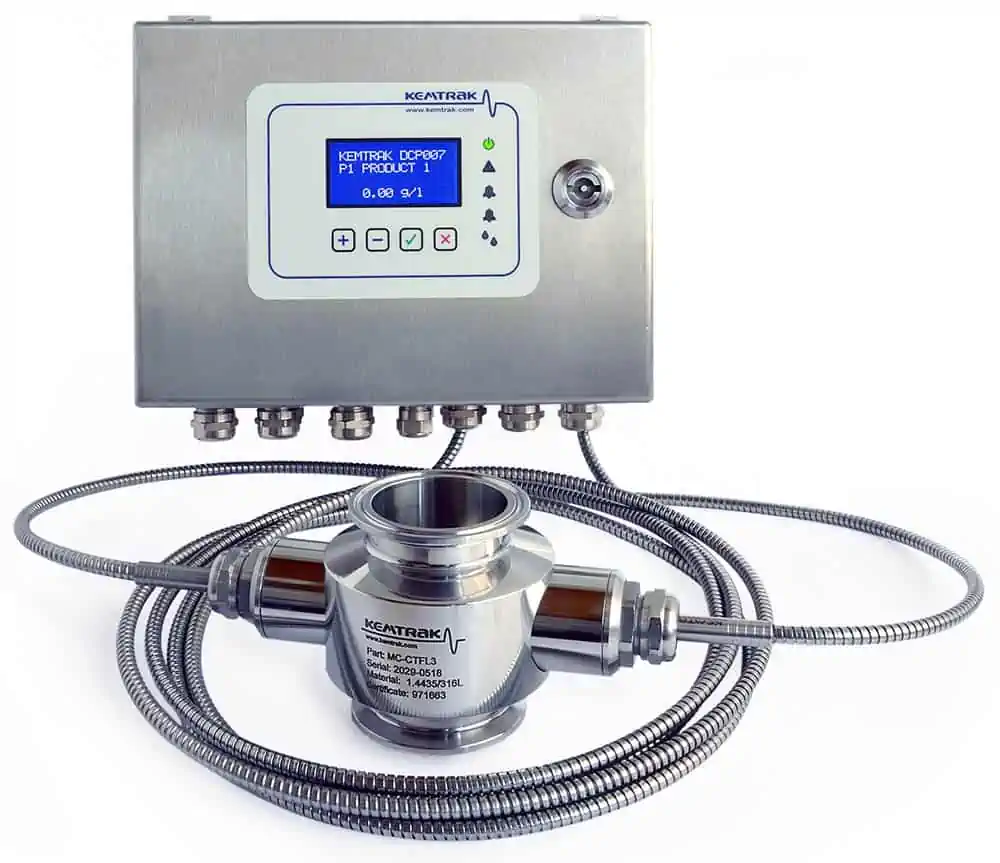
The DCP007-UV absorbance photometer is a fiber-optic based measurement system ideally suited for real time online UV absorbance, concentration and detection applications. With each DCP007 equipped with two application specific wavelengths, the DCP007 can be configured for single, dual or referenced wavelength measurement. Referenced wavelength measurement can be weighted to correct for disproportionate absorbance at the primary and reference wavelengths. Strong correlation and agreement exist between offline laboratory sample tests and online DCP007 measurements to give users high confidence in the process values reported while contributing to process quality and efficiency.

  • DCP007-UV

DCP007-UV

Kemtrak DCP007 UV
Download Datasheet

UV ANALYZER

Wavelength Range 250 – 1050 nm
FWHM 10nm
CWL +/- 1nm
Photometric Range 0 – 4.5 AU @ 280nm, 10mm OPL 0 – 5 AU @ 500nm, 10mm OPL
Photometric Accuracy +/- 0.001 AU @ 1 AU
Light Source Life > 20,000 hours
Outputs Analog: Up to two 0/4 – 20mA
Relays (1A load):
  1 x Failsafe
  2 x Alarm/Status (User Configurable)
  1 x Automatic Cleaning
Inputs 5 x Digital Inputs Configurable for:
  Product/range selection
  Remote Zero
  Clean Cell
  Hold (freeze output)
  Data log control
  Light source control
Communications 1 x 10/100Base-T Ethernet for:
  HTML/Java Web Access
  Modbus over TCP/IP
Features Datalogger – user configurable with >17,000 record capacity
Event Logger – logs all system events >16,000 entries
PID Controller – analog or pulse width modulated relay output
Automatic Cell Cleaning – time-based routine that operates valves etc. to effect cell window cleaning

UV SPECTRA Multiwavelength UV Spectrophotometer

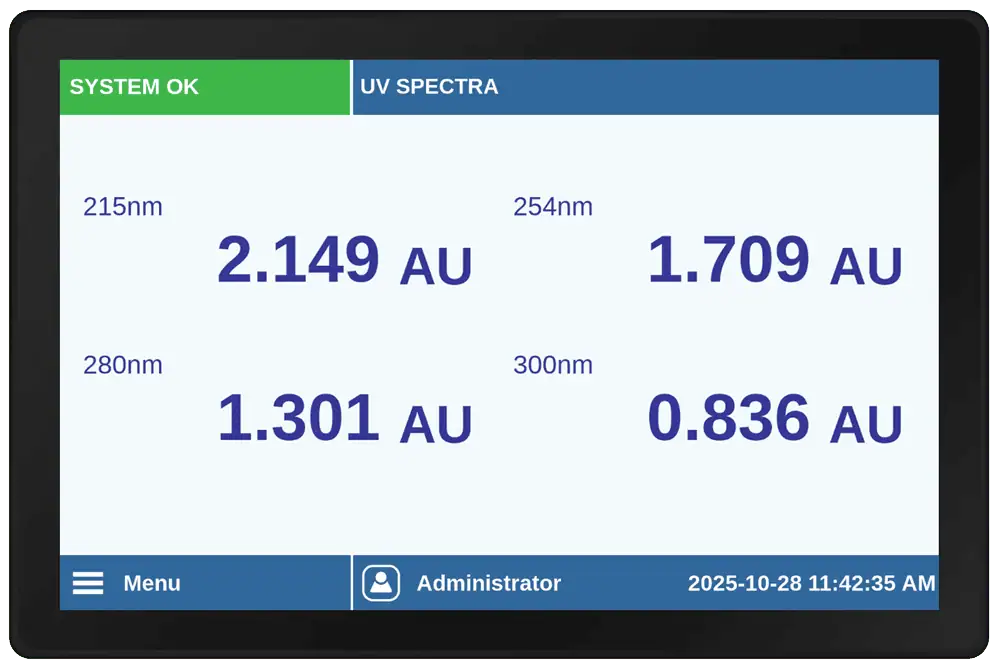
The Kemtrak UV-SPECTRA is an integrated multiwavelength deep-UV spectrophotometer designed for process monitoring across a range of 190–440 nm range. Using a stable xenon flash lamp, it provides simultaneous absorbance/transmission readings for up to ten discrete wavelengths, giving a clear picture of concentration changes, impurities, and process deviations in real time. When used with a Kemtrak robust, CIP/SIP-capable measurement cell, it’s ideal for installation in demanding environments and performs with the need for constant attention. For existing processes, it’s adaptable for installation on other brands of measurement cells. Overall, it’s a practical, plant-ready analyzer that delivers expanded UV data where it counts.

  • UV SPECTRA

  • Optional Touchscreen

  • Optional Discrete I/O Modules

UV SPECTRA

kemtrak spectra
Download Datasheet

UV SPECTRA

Wavelength Range 190 – 440 nm
FWHM 5nm
Reproducibility (CWL) +/- 0.5nm
Photometric Range 0 – 3 AU
Light Source Flashing Xenon
Lamp Life >10⁹ pulses, ~2 yrs continuous operation
Housing Stainless Steel 1.4301/304
Ingress Protection IP65 / Type 4X
Network Interface 1 Ethernet 10/100 PoE+ (IEEE 802.3at-2019) for control system
- Modbus TCP
- PROFINET RT (option)
- EtherNet/IP (option)
Network Interface 2 Ethernet 10/100 PoE+ (IEEE 802.3at-2019) for local components
- HMI (option)
- Analogue & Digital I/O (option)
Mounting Directly on Inline Measurement Cell (threaded, M25 x 1.5))
Power Consumption Max. 13 W (PoE, IEEE 802.3af-2019)
Dimensions Detector Housing: 77 mm x Ø 90mm / 3.03” x Ø 3.54”
Light Source Housing: 98 mm x Ø 90mm / 3.86” x Ø 3.54”
(overall length above plus measurement cell width)
Operating Temperature 10°C to 40 °C / 50°F to 104°F
Relative Humidity 10 - 90% (non-condensing)
Features Damping: 1 to 60 seconds
Noise Filter: Bubble and Particle Reject
Calibration: 10 tables for concentration - linear, piecewise linear, and polynomial
Event Logger: System events (info, warning, error etc.), > 1 million events logged, ring buffer
Configuration Setup Import/Export for Backup and Cloning
Compliance CE / LVD / RoHS / REACH / Mercury Free

Optional Touchscreen

Optional Touchscreen
Download Datasheet

Optional Touchscreen

Power Power 12-24VDC Terminal Block (11,5-25V) 24VDC 28W
Dimensions 265x176x44 WxHxD MM
Weight 2.1Kg
Operating Temp 0 °C to +50 °C
Relative Humidity 10 - 90% (non-condensing)
Display Lifetime Operation Lifetime (LED) Minimum 50.000 Hours Operation life means brightness goes down to 50% to initial brightness. Minimum operation lifetime is estimated data.
MTBF 100.000 Hours
Mounting VESA 100 / Panel Mount (245 x 160mm)
Vibration 1.0G, 5-500Hz Random
Ingress Protection Ingress Protection
Compliance CE / FCC / RoHS / LVD / REACH / WEEE

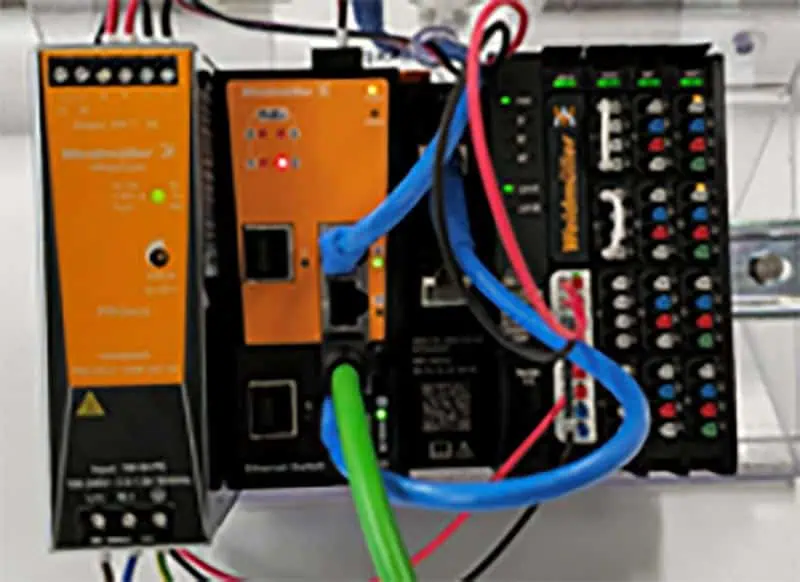
Optional Discrete I/O Modules

Spectra I-O
Download Datasheet

Optional Discrete I/O Modules

I/O Module Modbus TCP Ethernet coupler
mA output up to 12 channels 2- or 4-wire connection
16 bit resolution
Digital input 4 channel with reverse polarity protection
Digital output 4 channel with short-circuit protection
Mounting DIN rail mounted
Ingress Protection IP20

Inline Absorbance Measurement Cells

A wide range of inline flow cells are available for use with DCP007-UV and UV-SPECTRA UV absorbance instruments. Flow cells are factory built to suit the application they are to be used on from a wide selection of process fitting types and sizes, material types and optical path lengths.

INLINE OPTICAL MEASUREMENT CELLS

Single Use Absorbance Measurement Cells

Kemtrak Single Use Absorbance Measurement Cells are used in conjunction with a Kemtrak UV Absorbance photometers to provide real-time on-line measurement of UV-VIS absorbance in applications such as chromatographic separation/fractionation/filtration and solvent concentration gradient applications.

Single Use Absorbance Measurement Cells

Analyzer Traceable Validation Options

Kemtrak traceable calibration/validation options for inline UV absorbance instruments provide the opportunity for periodic measurement confidence assurance while saving valuable time and resources. A standard 10mm cuvette size holder, either intimately mounted on the measurement cell or remotely at a convenient place in one of the fiber optic cables, allows optical filters and/or liquid calibration standards to be placed directly into the optical measurement path without the need to uninstall the measurement cell from the line. The result is a highly reliable validation method that provides confidence the instrument is working to specification and is providing a correct and accurate measurement.

Kemtrak certified absorbance filters have a standard 12.5 mm square cuvette profile and can be used to validate both the online UV measurement instruments and offline devices such as laboratory spectrophotometers. Requiring only one set of filters to validate both laboratory and online instruments assures traceability and provides direct correlation between the two.

  • Inline Cell Option

  • Remote Option

  • Absorbance Filters

Inline Cell Option

TC-and-NIST cuvette
kemtrak spectra
Download Datasheet

CELL MOUNTED CALIBRATION/VALIDATION ACCESSORY

A cell mounted accessory is fitted directly onto one side of the absorbance measurement cell to allow filters and/or standard solutions to be inserted into the optical path.

The accessory can be rotated in-situ to work with any cell regardless of their installed orientation.

Each accessory is supplied with a blanking cap/seal that covers the cuvette entry.

Internationally recognized quality systems such as GLP, ISO 9000, ISO/IEC Standard 17025 and US Pharmacopeia chapter <857> require that this device is used with traceable reference materials.

Remote Option

Remote

REMOTE CALIBRATION/VALIDATION ACCESSORY

The remote validation accessory is fitted into one of the fiber optic cables leading to or from a DCP007-UV instrument in a location that allows for convenient insertion of cuvette style filters and/or standard solutions in a cuvette into the optical path.

It comes with four mounting holes and a cap/seal for the cuvette insertion port. When installing a remote validation accessory, an additional (typically short) fiber optic cable is necessary.

Internationally recognized quality systems such as GLP, ISO 9000, ISO/IEC Standard 17025 and US Pharmacopeia chapter <857> require that this device is used with traceable reference materials.

Absorbance Filters

Absorbance Filters
Download Datasheet

Absorbance Filters

Wavelength Range 200…2000nm
All filters are supplied with NIST traceable calibration data at 5nm increments.
Other spacing available
Available Filters 0A (Blank), 0.04A, 0.3A, 1.0A (100%T, 90%T, 50%T, 10%T)
Filters are available separately or as a boxed set. Made from Inconel coated optical glass, filter values are traceable to national standards (NIST) and suitable for the validation of Kemtrak UV-VIS absorbance photometers and spectrophotometers, laboratory spectrophotometers, and any other optical absorbance/transmission instrument that accepts standard 12.5mm x 12.5mm cuvettes.

Details:
  • Full NIST traceability and compliance
  • Surpasses NIST-2031a requirements
  • European pharmacopoeia EP 11, chapter 2.2.25
  • United States pharmacopeia chapter <857>SP

Frequently Asked Questions

Is a UV absorbance analyzer the same as a UV photometer? Expand

In practical industrial language, yes — a UV absorbance analyzer and a UV photometer are essentially the same class of instrument. Both measures how much ultraviolet light is absorbed by a process stream, and both output absorbance/transmission values used for concentration and/or purity-related decisions.
These instruments also go by several other names, depending on the industry, marketing spin, or measurement approach:

  • UV monitor
  • UV process analyzer
  • UV process photometer
  • Inline UV spectrophotometer (usually when multiple wavelengths are measured)
  • UV absorbance sensor
  • UV transmission monitor

The terms often overlap. The main differences come down to how many wavelengths they measure, how the optics are built, and whether they’re marketed as single-parameter photometers or multi-wavelength spectrophotometers. But in everyday plant use, they all fall into the broader bucket of UV optical process analyzers.

What is the difference between a UV absorbance photometer and a spectrophotometer? Expand

The difference comes down to how much spectral information the instrument measures and how flexible the optics are.

A UV absorbance photometer (like the Kemtrak DCP007-UV) is usually a single or dual-wavelength device. It passes UV light through the process and measures how much is absorbed at one or two fixed wavelengths. It’s built for process control, not lab-style analysis. The goal is stability, simplicity, and repeatable readings tied to known process parameters — concentration, purity, breakthrough detection, color intensity, and so on. You choose the wavelength(s) up front, and the instrument measures absorbance at only those wavelengths.

A UV spectrophotometer (such as the Kemtrak UV SPECTRA), on the other hand, captures a broader portion of the spectrum. Instead of fixed optics, it uses an array, grating, or other dispersive element to measure a continuous spectral profile. That allows more detailed identification of compounds, multi-component analysis, and deeper diagnostic work. In industry, inline “spectrophotometers” may or may not measure a full spectrum like a lab unit, but they still gather many wavelengths at once, giving more analytical flexibility than a simple photometer.

In short:

Photometer: narrow, fixed wavelength(s); built for specific inline control.

Spectrophotometer: broad, multi-wavelength measurement; built for deeper analysis or multi-component monitoring.

What is an inline UV photometer? Expand

In-line UV photometers (also known as UV monitors, analyzers, and detectors) use light to provide real-time measurement of the concentration of components in a liquid (or gas) process stream. Absorbance photometers can be configured for a variety of purposes, with the configuration and technique used depending upon the specific measurements needed. Simply put, an industrial UV photometer is used to measure the amount of light left (or more specifically, the amount of light lost) in a light beam (often at a specific wavelength) after it has passed through an industrial process stream.

How does an absorbance photometer work? Expand

Analytical photometry has been around for many decades. Many earlier photometers were offline units based upon visual standards. They utilized glass plates of specific colors that were compared stereoscopically to process fluid samples with the naked eye. As technology progressed, in-line absorbance instruments using photodetectors were developed that measured light more accurately, repeatably and in real time.

The most common type of photometers, of which the Kemtrak DCP007 is a notable example, uses light absorbance techniques to determine and report the concentration of a particular component in a fluid stream. They are usually configured to operate with one or two discrete wavelengths in the UV-VIS light region depending upon the application. Beer-Lambert law—which relates the reduction in intensity of light as it passes through a material to the concentration of the material absorbing the light—applies in this application. The optical path length must be configured to suit the expected absorbance measurement range.

How can I measure more than two UV wavelengths online? Expand

UV Photometers are typically limited to having a maximum of two wavelengths that can be measured. Using an online spectrophotometer (such as the Kemtrak UV SPECTRA) changes that dynamic and allows for additional wavelengths to simultaneously monitored.

Having more absorbance values available at different wavelengths allows for detailed identification of compounds, multi-component analysis, and deeper diagnostic work. The UV SPECTRA, for instance, scans all wavelengths from 190nm to 440nm and allows users to select up to 10 wavelengths from that scanned range for monitoring purposes.

What applications are UV photometers used for? Expand

UV photometers typically measure the concentration of a specific substance or species within a flowing liquid (or gas) stream. Each photometer consists of an advanced electronic unit, with a light bench constructed using high-performance light source technology, rugged industrialized fiber optic cables, and a measurement cell.

Photometers can be found in many industries, but are commonly found in the biotech sector where they are used for chromatographic separation of proteins and filtration performance and breakthrough applications.

How can you get the best possible performance from an inline absorbance instrument? Expand

Getting the most out of your inline absorbance instrumentation is not as difficult as you might think. If you follow several straightforward steps, you should have no issues with your measurement(s) and get good performance when they are in operation.

  • Installation. Wherever possible, always install a photometer in a pipe where flow is vertically upwards. This will ensure the most homogeneous sample is passing through the photometer light beam.
  • Flow conditioning. Aeration is the number one interfering factor in online optical measurement performance. In absorbance systems, it makes measurement noisy and creates errors. Suppressing aeration in the flow stream greatly improves the quality of the measurement.
  • Fouling compensation. Optical instruments use windows to introduce and extract light from pipelines. In some applications, these windows can become contaminated with process material forming a film or layer on their surfaces, and this looks like absorbance to the instrument because it partially blocks light. By referencing your absorbance measurement at the wavelength(s) of interest against another wavelength where your process doesn’t absorb, you can electronically adjust for window contamination so the measurement remains stable.
  • Instrument light decay. Today, LEDs are widely available and older style mercury vapor gas discharge lamp photometers are essentially obsolete. Whatever the light source in your unit, make sure it has the ability to self-check and adjust the light output so that it remains constant. Changing light intensity looks like a change in measurement to a photometer and contributes greatly to drift.
  • Stray light. Incidental light getting into your instrument’s optical circuit can create havoc with the measurement. This is not usually a problem with metal pipe installations, but can be quite extreme when installing photometers in plastic pipes and clear tubing as ambient light can travel through non-black materials and enter the light circuit. If you observe trends like measurements declining every time the sun comes out, you have an issue with light contamination. Install blackout material upstream and downstream of your sensor—it may be necessary to do so for quite a distance—to prevent ambient light from being a problem.
  • Preventative Maintenance. Older style UV photometers are prone to continual baseline drift primarily because of the mercury vapor arc lamps being used for the light source. These light sources have a very short lifetime compared to modern solid state LED sources, so should be replaced often. They emit a lot of energy at 256nm (regardless of the wavelength being measured) and this caused solarization to bandpass blocking filters that remove the light outside of the wavelength of interest. With the fairly rapid decay of the lamp and the solarization of the filters, the linear range of the measurement soon changes from perhaps 0 - 1.5A to 0 – 0.5A and this has a tremendous effect on accuracy, particularly in high concentration applications. It is vital that frequent validation of the instrument’s measurement capability using certified reference standards is carried out to identify when these critical optical components require changing.
What are the benefits of using the NIST-traceable validation accessory on a Kemtrak UV Absorbance Instrument? Expand

The Kemtrak NIST-traceable validation filter holder lets you verify photometer performance quickly and without pulling the flow cell out of the line. It accepts either certified NIST-traceable reference filters or liquid samples, giving you a simple way to confirm the instrument is operating within spec during routine checks.

The holder can be factory-mounted on the optical flow cell or supplied as a standalone unit in the fiber-optic chain. It uses standard 10 mm cuvette-style NIST absorbance filters—the same format commonly used in laboratory spectrophotometers—so you can rely on familiar, proven reference materials.

Key benefits include:

  • Quick verification of measurement accuracy
  • Standard 10 mm cuvette format
  • Uses the same NIST filters already used in the lab
  • Direct cross-validation between lab spectrophotometers and Kemtrak in-line photometers
  • Ability to check liquid samples
  • Accepted by major quality systems including GLP, ISO 9000, and ISO/IEC 17025
What is included in a DCP007-UV absorbance photometer system? Expand

Each DCP007-UV absorbance photometer consists of an electronics unit configured for wavelength, an inline measurement cell with the optimum optical pathlength for the application, and a pair of high quality fiber-optic cables.

What is included in a UV SPECTRA spectrophotometer system? Expand

Each UV SPECTRA inline absorbance spectrophotometer consists of a Xenon light source module, a compact detector module, and an inline measurement cell with the optimum optical pathlength for the application. Plug in connection cables are selected for length required. Optional items include a touch screen HMI for configuration and local readout, communications gateways, and various modules for discrete analog and digital I/O.

Does the UV SPECTRA require a power supply? Expand

In its standalone form, the UV SPECTRA unit draws power through PoE from its network connection. When used with an HMI and/or other optional modules, a 24Vdc power supply is required.

What is the measurement range of the DCP007-UV? Expand

Cleverly designed amplification stages around the photometric detection circuitry of the DCP007-UV allows for linear absorbance performance with full measurement resolution up to 3A and an overall measurement range of up to 4.5A. This impressive measurement range ensures effectiveness in high OD applications, without compromising process flow rates.

What are UV absorbance photometers, and what are the applications of the DCP007-UV? Expand

UV absorbance photometers (also called UV analyzers or UV monitors) measure the amount of light absorbed by materials in solution at specific UV wavelengths. They are widely used in biotechnology and bioprocessing to monitor the presence and concentration of expressed proteins and other UV-active compounds following separation steps.

The Kemtrak DCP007-UV is an advanced dual-wavelength photometer designed for accurate in-line UV absorbance measurement. It uses precision fiber optics to transmit light from a solid-state UV LED source through the sample cell and back to the detector, enabling real-time concentration calculations. With no electrical components in the inline cell, the DCP007-UV is compact, safe for hazardous areas, and easy to integrate into process lines. It provides a cost-effective solution for continuous flow stream monitoring.

Traditional UV photometers often use mercury vapor lamps, which expose the process to high-intensity broad-spectrum UV light and heat. This can degrade valuable product, create unknown byproducts, and lead to systematic measurement drift due to lamp aging and filter erosion. The DCP007-UV avoids these issues by employing low-power, wavelength-specific solid-state LEDs. These LEDs deliver thousands of times less energy than conventional lamps, eliminating thermal or photochemical damage, and are available at discrete UV wavelengths from 250 nm upwards.

The instrument’s proprietary dual-wavelength design, along with advanced digital electronics, allows measurements up to 4.5 AU (1 cm path length) at two discrete wavelengths. Optional shorter path lengths enable even higher optical density measurements. Hygienic, zero-dead-volume inline cells are free of electronics or moving parts, making them ideal for hazardous environments. In-line verification is possible using the Kemtrak Absorbance Photometer Traceable Verification Accessory, which allows calibration with the same NIST-traceable standards used in laboratory instruments, providing direct correlation to offline methods.

Typical applications of the DCP007-UV include:

  • Chromatographic separation monitoring
  • Micro- and nano-filtration process control
  • Concentration measurement of aromatic solvents

With its combination of solid-state UV LEDs, precision optics, and advanced electronics, the DCP007-UV delivers unmatched performance for in-line UV absorbance measurement and peak detection in industrial processes.

To get the UV Absorbance Measurement you need, talk to our professional team today!

CONTACT US TODAY

Want help breaking down solutions for your measurement needs?

Please call us at (925) 461-5059 or fill out this form to get in touch with us.

Step 1 of 4

25%
  • This field is for validation purposes and should be left unchanged.
  • I'm Looking For:

  • I'm Interested In:

    (Check all that apply)
  • Give Us Some Details:

  • Drop files here or
    Max. file size: 50 MB.

    SOUTH FORK INSTRUMENTS
    3845 Buffalo Road
    Auburn, CA 95602
    Tel: (+1) 925-461-5059

    South Fork Instruments Logo

    HOME
    DATA SHEETS
    NEWS & RESOURCES
    TERMS & CONDITIONS

    • Home
    • Solutions
      • Coriolis Mass Flow Meters
      • High Pressure Coriolis Flow Meters
      • Turbidity Measurement Solutions
      • Color Measurement Solutions
      • UV-VIS-NIR Concentration Measurement
      • Solids Concentration Measurement
      • Oil-in-Water Measurement
      • NIR Optical Probes & Process Sensors
      • pH & ORP Electrodes
      • Water Quality Analyzers
      • Process Sensors
      • Sensor Housing & Holder Solutions
      • Foam Detection & Control
      • Spectroscopic Compositions Analysis
      • Moisture Analysis
      • Oil-On-Water
      • Algal Bloom
    • Products
      • Rheonik Mass Flow Meters
      • Exner NIR Process Sensors
      • Exner Housings & Accessories
      • Kemtrak Photometers
      • Kemtrak Turbidimeters
      • Kemtrak Oil-in-Water Analyzers
      • UV Absorbance Photometers
      • Hycontrol Foam Detection & Control
      • Refex pH & ORP Electrodes
      • SPX Flow Water Quality Analyzers
      • SFI pH/ORP Sensor
      • pH/ORP Transmitters
      • Inline Spectrophotometers
      • Portable Spectrophotometers
      • Oil-On-Water ROW
      • Algal Bloom Row
    • Resources
      • Data Sheets and Brochures
      • Application Information
      • Comprehensive Guide to Industrial pH Probes
      • News and Resources
      • Careers
    • Contact
    • Call 866-953-4668